
What is C-HEAT?
C-HEAT — the Chelsea & East Boston Heat Study — is a seven-year partnership between the Boston University School of Public Health and GreenRoots that began in 2019. Together we study extreme heat exposure in Chelsea and East Boston, two environmental justice communities where streets, homes, and workplaces can run dangerously hot. C-HEAT pairs scientific research with resident-led action, and has grown into a model for community-based climate justice work that now reaches well beyond Chelsea and East Boston.
What we do.
Each summer, C-HEAT installs temperature sensors across Chelsea and East Boston and runs heat vulnerability field studies in participant households — collecting indoor and outdoor temperature measurements, weekly questionnaires about AC use and heat-related illness, and biometric data on heart rate, sleep, and activity. We've also led photovoice projects with residents and workers, participatory mapping events, and a standing C-HEAT Advisory Board that helps direct where we monitor and what we measure. Our findings inform cooling interventions across the city — white roofs at Chelsea schools, AC giveaways, hydration stations, the Tree Keeper Program, and the Cool Block — and support state air quality legislation through our work with the MA Environmental Justice Table.
Why we do it.
In our 2020 field study, we identified areas in Chelsea and East Boston that were 7°F hotter than areas with parks, and indoor temperatures that ran 3.5 to 10 degrees warmer than outdoors on hot weeks — even though 100% of participating homes had some form of air conditioning. Nearly 40% of participants said they had to make choices about which bills to pay and how to prioritize expenses, meaning the residents most exposed to extreme heat are often the least able to cool down. Workers — identified through our photovoice project as a particularly vulnerable population — face their own heat risks on the job. C-HEAT exists to make these risks visible and to support the community-based cooling interventions our research shows can work.
Extreme Heat is a Public Health Issue
-
Extreme Heat is a Public Health Issue -
Project Partners
C-HEAT is a partnership between GreenRoots and the Boston University School of Public Health, combining community leadership with academic research expertise to better understand and address the impacts of extreme heat.

A community-based organization working to achieve environmental justice and improve public health in Chelsea and East Boston
An academic public health partner contributing research expertise, data analysis, and evaluation to support the project’s goals
Build community capacity to respond to extreme heat
Identify populations and locations at higher risk
Understand the factors that contribute to heat exposure
Support data-informed policy and community solutions

C-HEAT PHOTOVOICE 2021
Our Goals
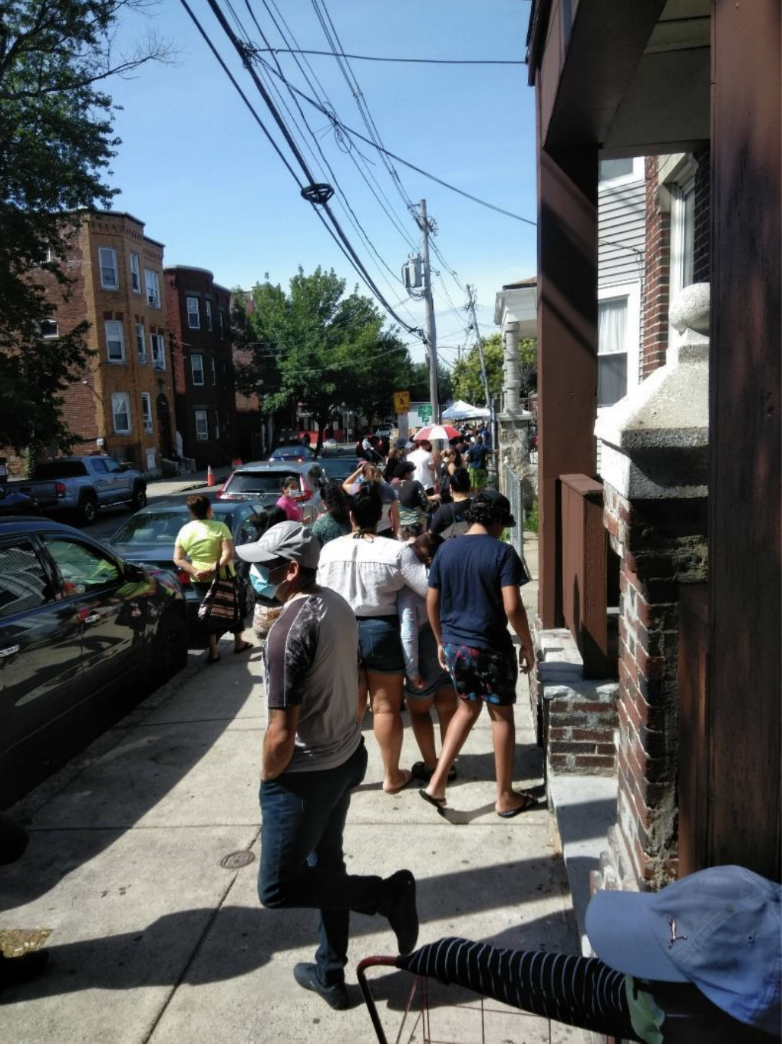
C-HEAT PHOTOVOICE 2021
Study Overview
-
C-HEAT staff interview over 20 Chelsea and East Boston city councilors, community leaders, and community planning and health professionals about their perceptions of heat and air pollution, associated health outcomes, the data they rely on, and the role of residents in shaping policy.
-
After photovoice surfaces workers as a particularly vulnerable population, we pilot heat monitoring devices among workers in Chelsea and East Boston, and begin partnering with MassCOSH for future worker-focused monitoring and photovoice. GreenRoots' Tree Keeper Program — a stewardship program that has residents watering newly planted street trees while building community leadership — expands in 2024. The pilot lifted tree survivability from 30% to over 85%. By the end of 2024, around 84 Tree Keepers are active across four Chelsea neighborhoods, with over 120 trees planted.
-
The City breaks ground on a new park at the Cool Block, significantly expanding green space in the area. GreenRoots secures an additional $520,000 toward construction and engages community members in the park's design and interim uses of the site. Continued monitoring at the Cool Block shows ambient temperatures decreasing relative to hot-spot reference sites, a 22% increase in albedo, and modeled ambient temperatures dropping 0.2°C on a hot day. Residents report co-benefits including greater awareness of extreme heat, community empowerment to drive change, and increased national attention and funding for community-led heat initiatives.
-
The ribbon-cutting for Bear Park takes place in April 2026. Together with the MA Environmental Justice Table, the C-HEAT team helps move two air quality bills — one focused on indoor air pollution and one on outdoor — through the State House. GreenRoots organizes a letter-writing event with over 40 youth, hand-delivering letters to the Public Health Committee. The indoor bill is reported out favorably to the Ways and Means Committees in both the House and the Senate.
-
B-COOL: After a talk at the Green Ribbon Commission's Extreme Heat workgroup, The Boston Foundation funds B-COOL — a partnership between BUSPH, A Better City, and the City of Boston that expands heat monitoring across Boston's environmental justice neighborhoods (Dorchester, Roxbury, Chinatown, Mattapan, and East Boston) to improve the city's heat advisory protocols and preparedness.
CATCH: BU faculty receive a Wellcome Trust Foundation Climate Impact Award for Community Adaptations to City Heat (CATCH), extending C-HEAT's model to Boston, Phoenix, and New Orleans. CATCH engages health departments and city planners across all three cities and is launching photovoice projects modeled on C-HEAT in Summer 2026.
Temperature Sampling
How We Do It
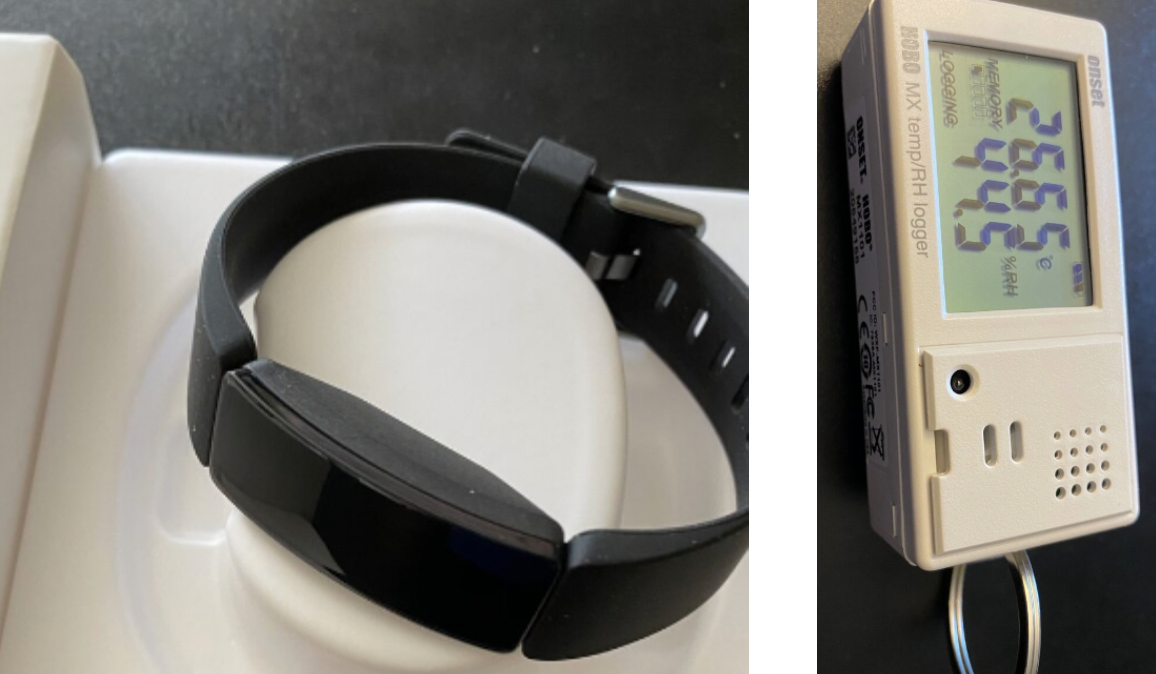
Indoor monitoring equipment included HOBO devices and FitBits.
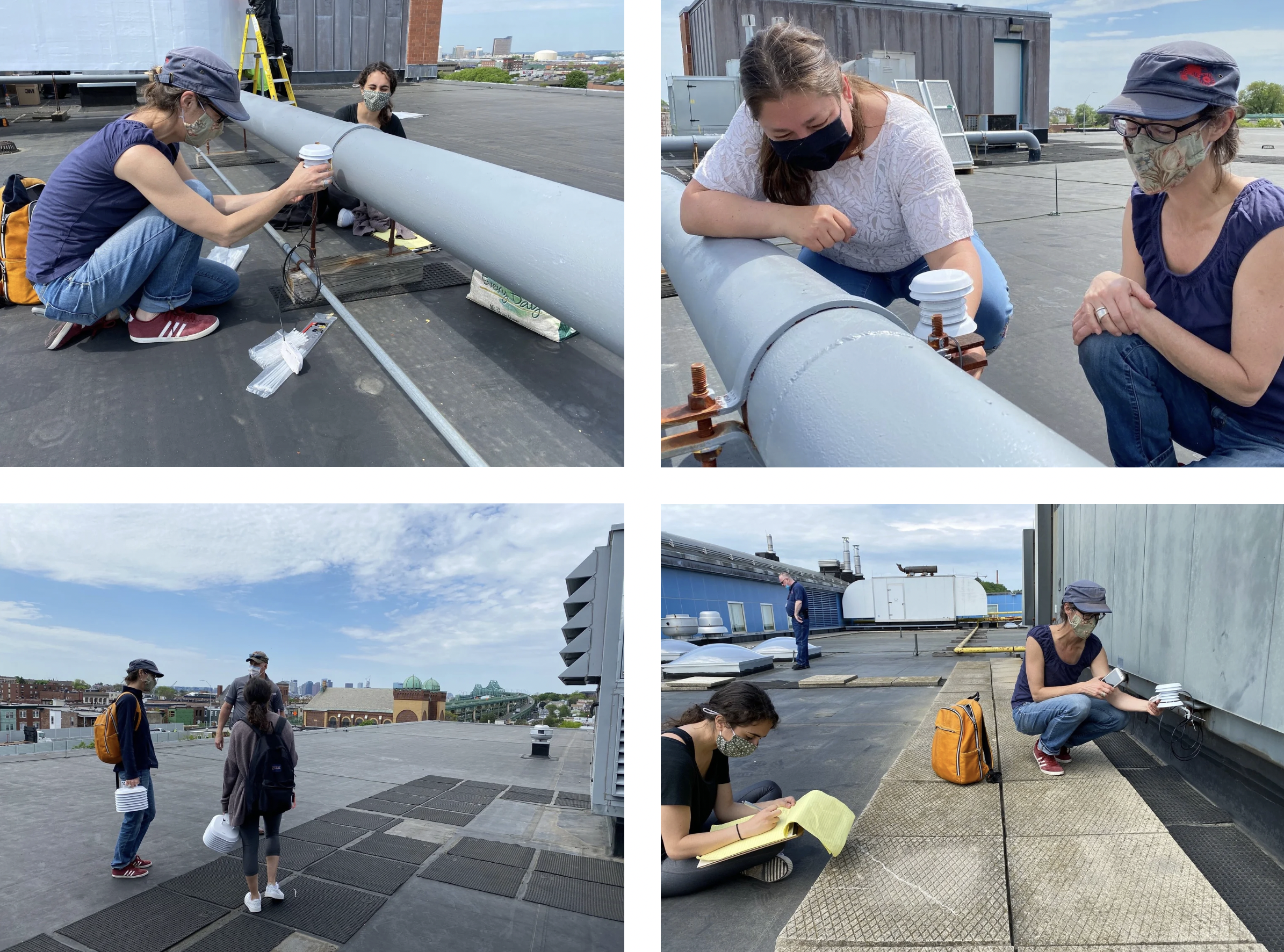
Field teams collected temperature data across Chelsea and East Boston using sensors placed in a variety of environments, including rooftops, streets, and shaded areas. This approach captures how heat exposure varies across different parts of the community
Sensors were carefully placed to measure temperature differences across surfaces and conditions, including shaded and unshaded areas. These measurements help identify localized heat patterns and better understand environmental drivers of heat exposure.
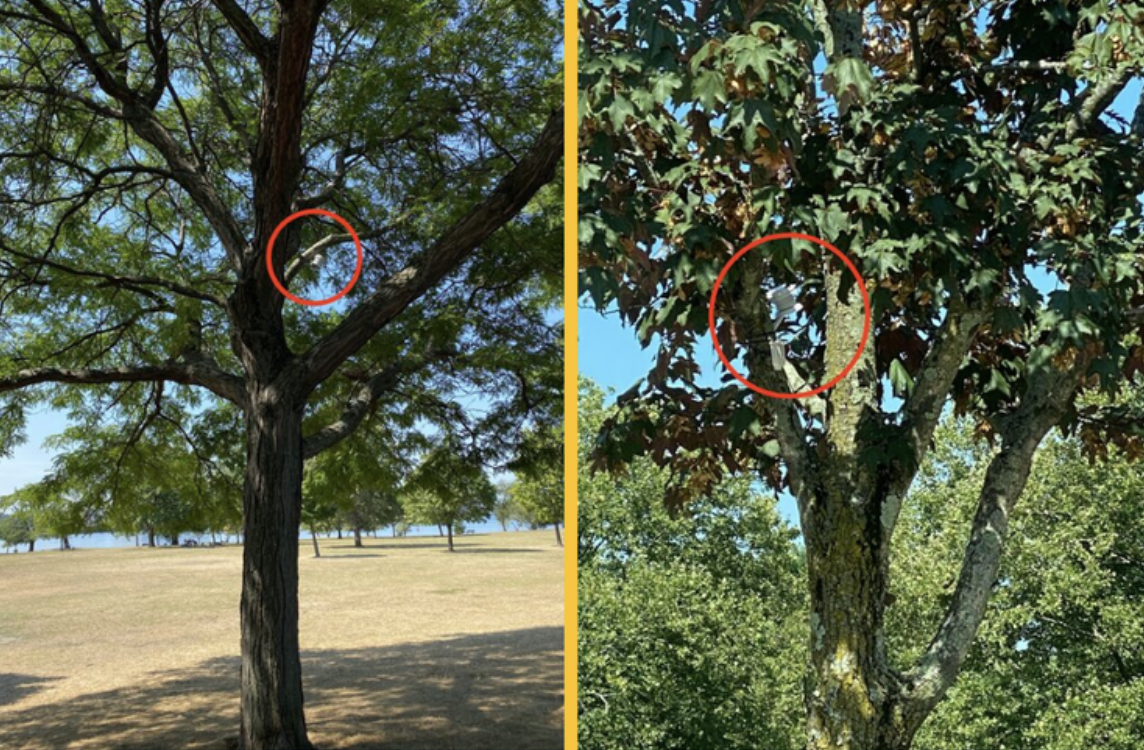
Outdoor monitoring equipment is installed on trees in Chelsea and East Boston.
Our Team
Curious about the people behind the work? Click below to learn more about who we are.
Learn more through the project’s data, community resources, and research output.s